3 Myths About Pelvic Health: Debunked by Our Team
OCT 21, 2026Believing these myths can keep you stuck in a cycle of discomfort for years. The truth is that your pelvic floor is a highly responsive, trainable, and resilient system.
Read More
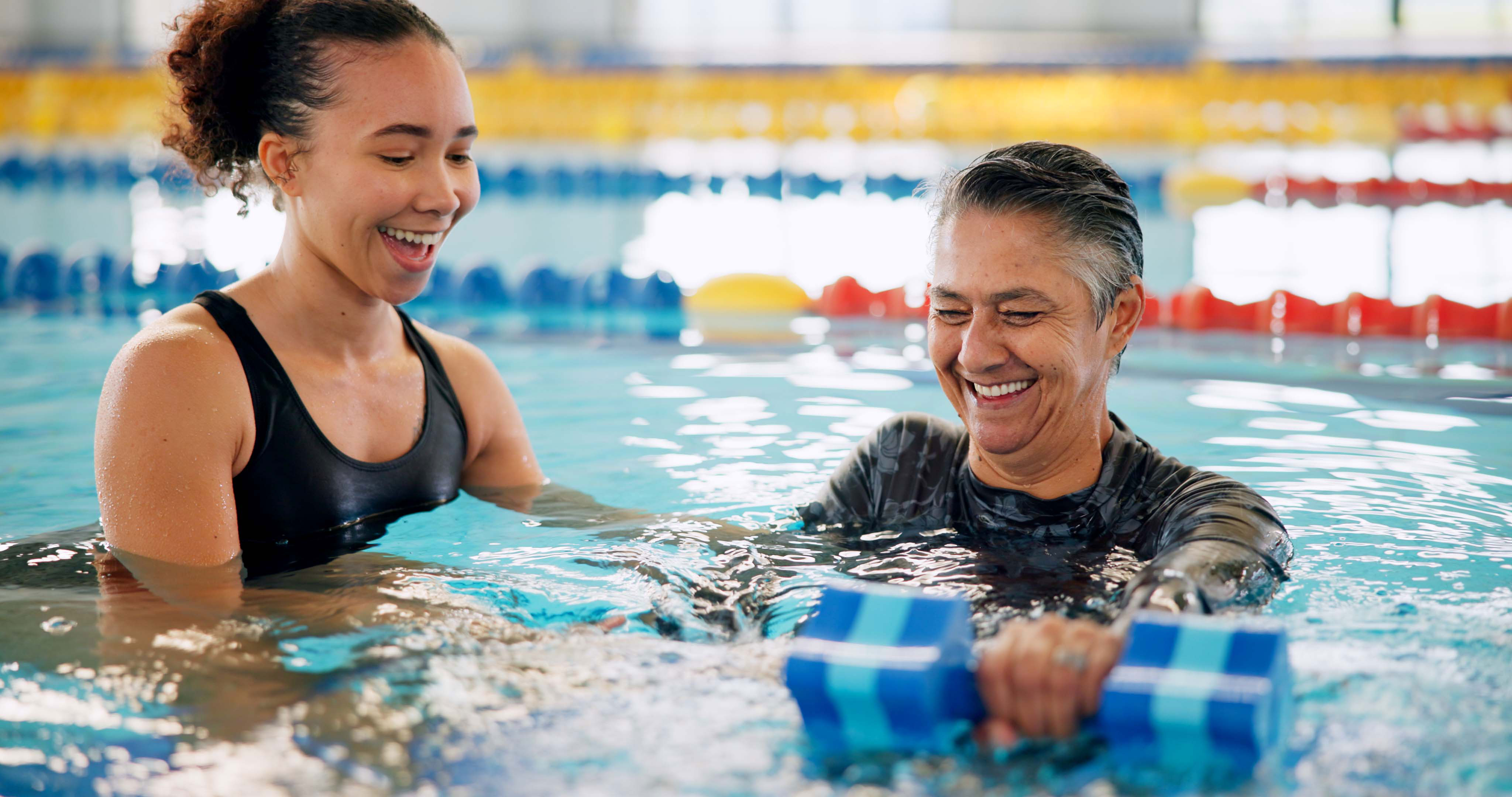
When we think of physical therapy, we often picture an environment where we work with dedicated therapists to regain our strength and independence. While traditional land-based sessions are the foundation of rehabilitation, many patients find that adding aquatic physical therapy—the practice of performing exercises in a temperature-controlled pool—can be a transformative part of their recovery journey.
If you’ve been struggling with pain or mobility issues, here is why stepping into the pool might be the perfect complement to your current treatment plan.
The most notable benefit of water is buoyancy. When you are submerged, the water supports a significant portion of your body weight.
The Benefit: Water offers a supportive environment that takes the pressure off your joints. This allows you to begin strengthening muscles and improving range of motion with a sense of ease, helping you reach your recovery milestones comfortably.
While water makes you feel lighter, it also acts as a gentle, effective training tool. Water is 800 times denser than air, meaning every movement you make is met with consistent, smooth resistance.
The Benefit: Unlike free weights, which provide resistance in limited directions, water provides resistance in every direction. This helps you build functional strength and core stability in a controlled way, allowing for a comprehensive workout that supports your muscles without the need for heavy equipment.
Have you ever noticed that your joints feel better when you’re submerged? That’s thanks to hydrostatic pressure—the pressure the water exerts on your body from all sides.
The Benefit: This pressure acts like a natural, full-body compression garment. It helps encourage circulation, which can be particularly helpful for reducing minor swelling and inflammation. It’s a soothing, effective way to help your body recover while you stay active.
Maintaining balance is a complex task, and for those recovering from injury or dealing with neurological conditions, the fear of losing footing can be a significant barrier to progress.
The Benefit: The pool provides a unique environment for balance training. Because the water’s viscosity slows down your movements, you have more time to react and correct your posture if you start to wobble. Furthermore, the buoyancy of the water gives you a "cushioned" safety net, allowing you to challenge your balance in ways that would be too risky on land. It is the perfect place to build the confidence and core coordination needed to stay steady on your feet in the real world.
To improve your balance on land, you must first develop a strong, stable core. Water is an ideal medium for engaging the deep abdominal and back muscles that keep you upright.
The Benefit: Because the water is constantly moving around you, your body must subconsciously engage its stabilizing muscles to maintain your center of gravity. This constant, gentle challenge helps you develop a "reactive" core that is better prepared to handle the physical demands of daily life, effectively bridging the gap between pool exercises and land-based mobility.
Water temperature plays a crucial role in therapy, as the soothing warmth of the water helps to relax muscles and increases blood flow to the tissues.
The Benefit: This therapeutic warmth makes it significantly easier to perform gentle stretches and increase your range of motion. You’ll likely find that you can move with greater fluidity and less stiffness, making your sessions feel both productive and restorative.
Aquatic physical therapy is a versatile, science-backed tool that can benefit a wide range of patients. It is frequently prescribed for:
Don't know how to swim? That isn't an issue at all. Aquatic physical therapy is not about swimming laps or putting your face in the water. Most sessions take place in shallow, temperature-controlled pools where you can comfortably stand with your head well above the surface. Your therapist will be right there with you, guiding you through controlled movements that focus on healing, not athletic performance.
If you are looking for a way to enhance your healing process and want to add variety to your recovery routine, talk to your doctor or physical therapist about aquatic options. It’s time to embrace a new way to move and support your body’s natural ability to heal. Learn about CHI Health Outpatient Rehabilitation.
Make sure to always consult with your physician or a licensed physical therapist before beginning any new exercise program to ensure it is appropriate for your specific health needs.


Believing these myths can keep you stuck in a cycle of discomfort for years. The truth is that your pelvic floor is a highly responsive, trainable, and resilient system.
Read More
Pelvic health physical therapy touches nearly every domain of maternal health: musculoskeletal function, bladder and bowel control, the physical work of caring for a newborn, mental health, and even cardiovascular health.
Read More
If you’ve been experiencing discomfort or "little accidents," you aren’t alone, and it’s not just "part of getting older."
Read MoreWhen you need local health information from a trusted source, turn to the CHI Health Better You eNewsletter.